
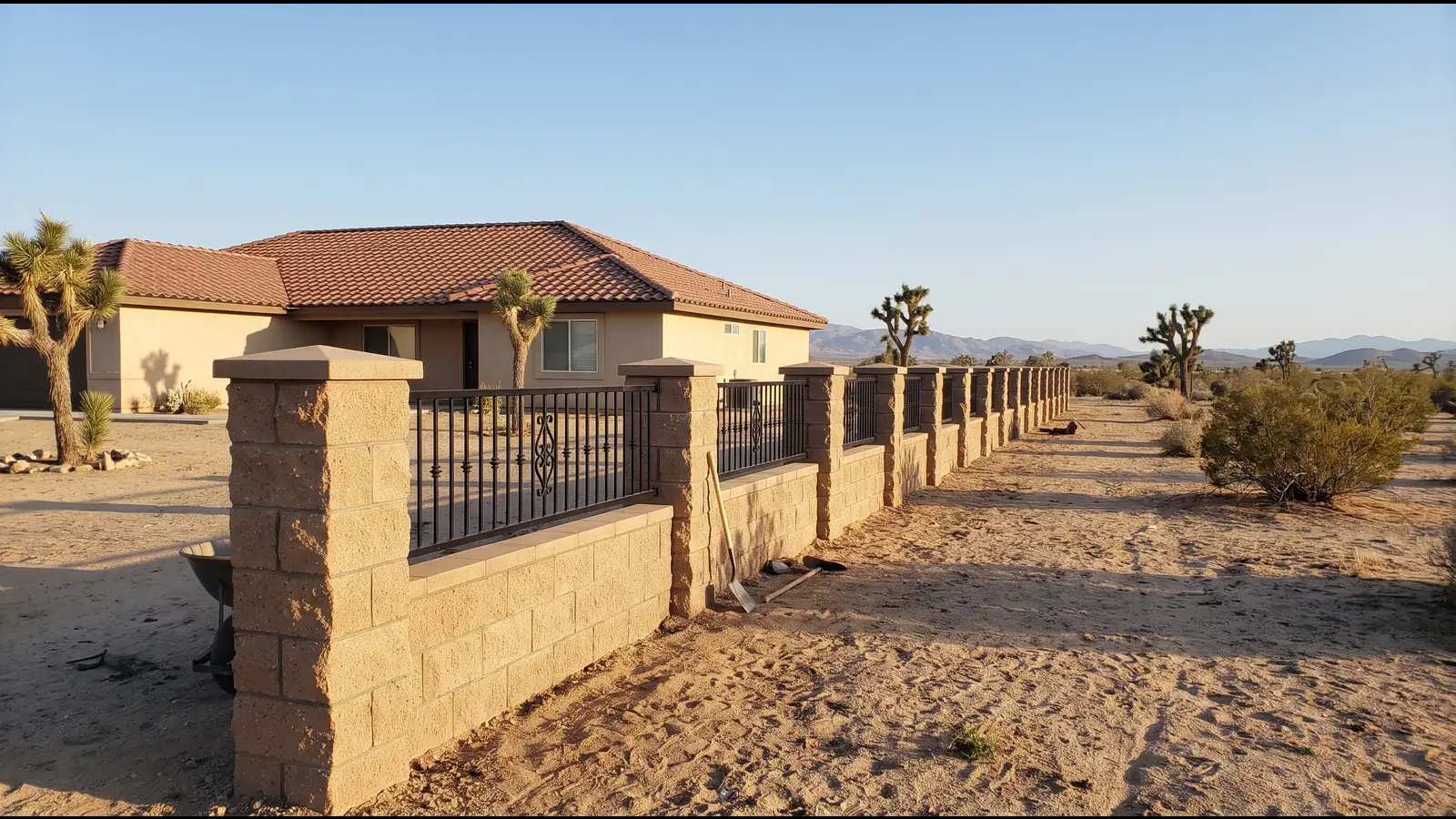
Pool Fence Types That Meet the Barrier Rules
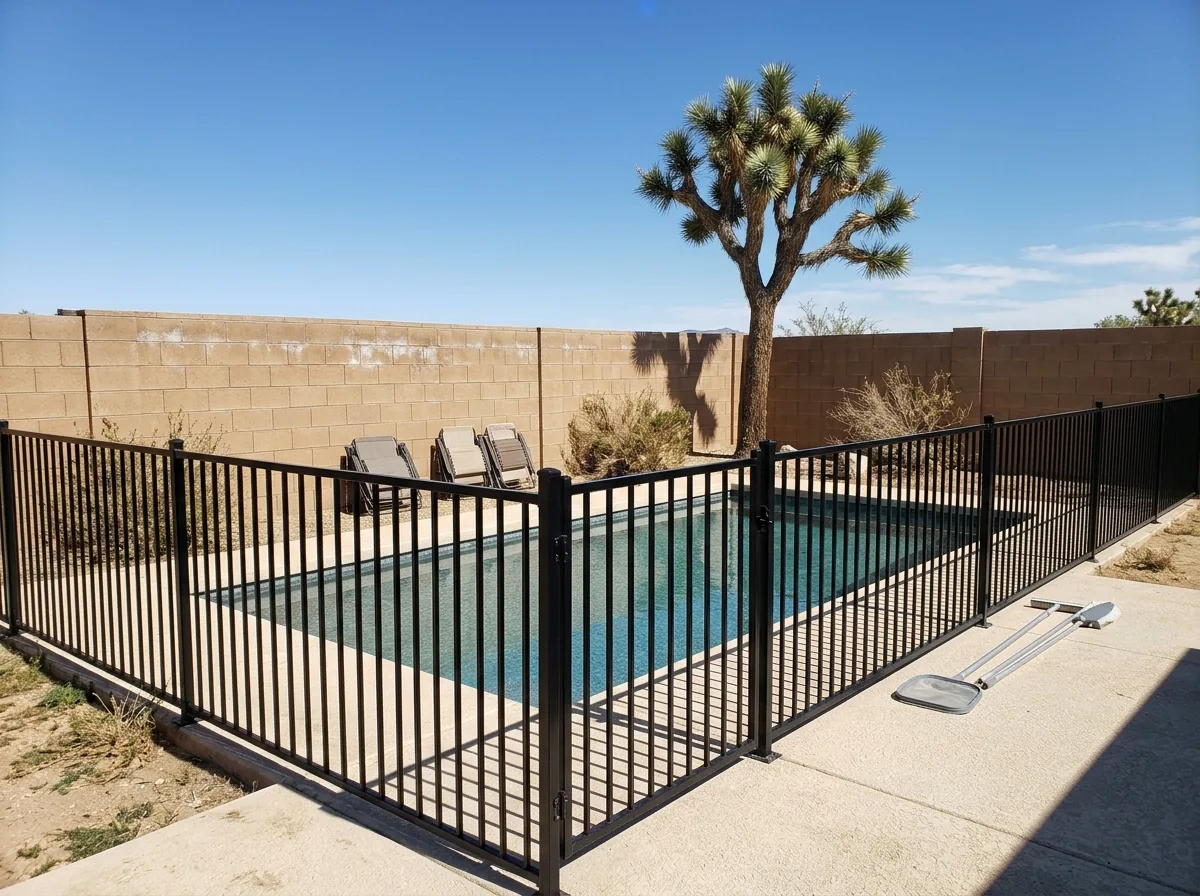
Aluminum Pool Fences
Aluminum is a very common pool barrier because it doesn't rust and comes in preassembled sections that are easy to install. Hesperia's handout has a rule for any picket design: if the horizontal rails sit less than 45 inches apart, they must face the pool side, and the pickets can be no more than 1¼ inches apart. Panel styles and gates are on our aluminum fence page.
- Installed: about $30 to $45 a linear foot
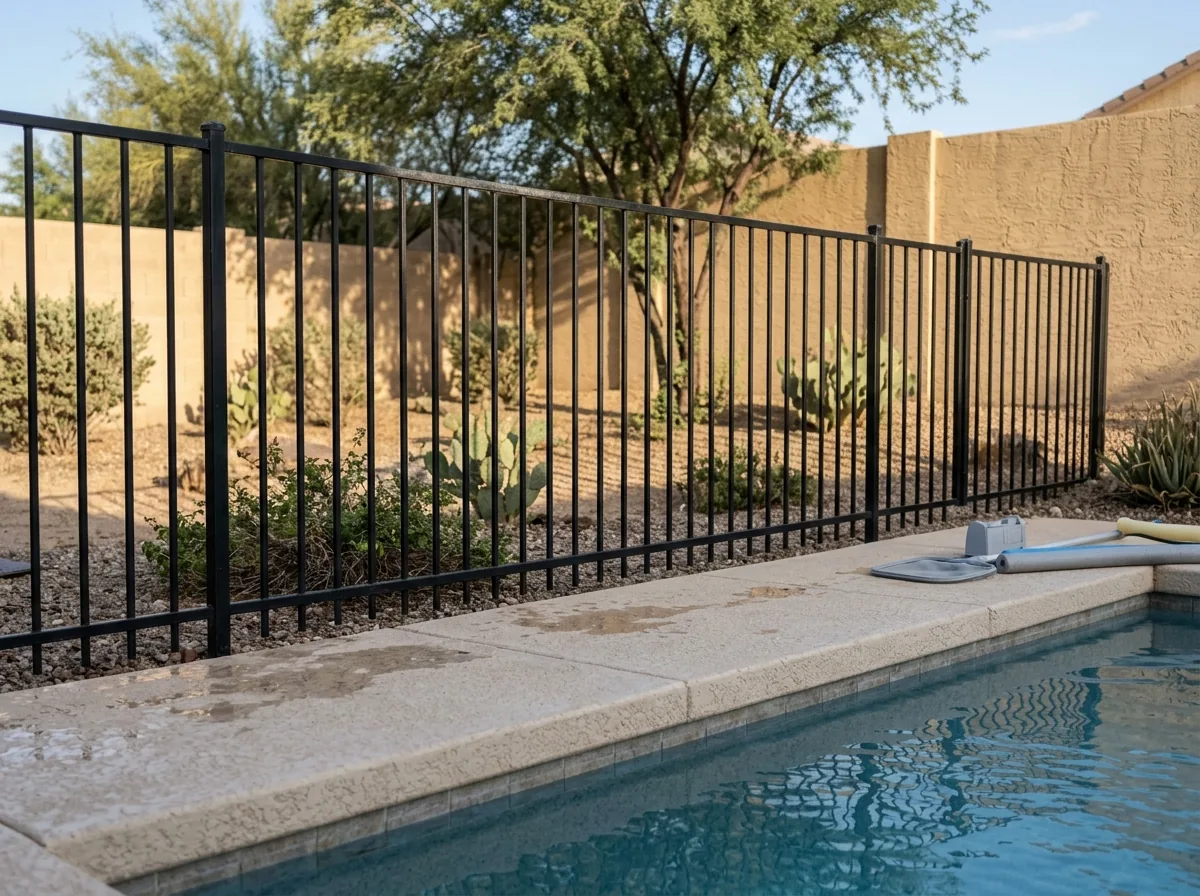
Tubular Steel Pool Fences
Tubular steel gives a heavier fence that matches iron elsewhere on the property. The same rail rule applies. Where the horizontal supports are 45 inches or more apart, the handout lets the picket gap widen to 4 inches.
- Installed: about $50 to $85 a linear foot
- More on finishes: wrought iron fences
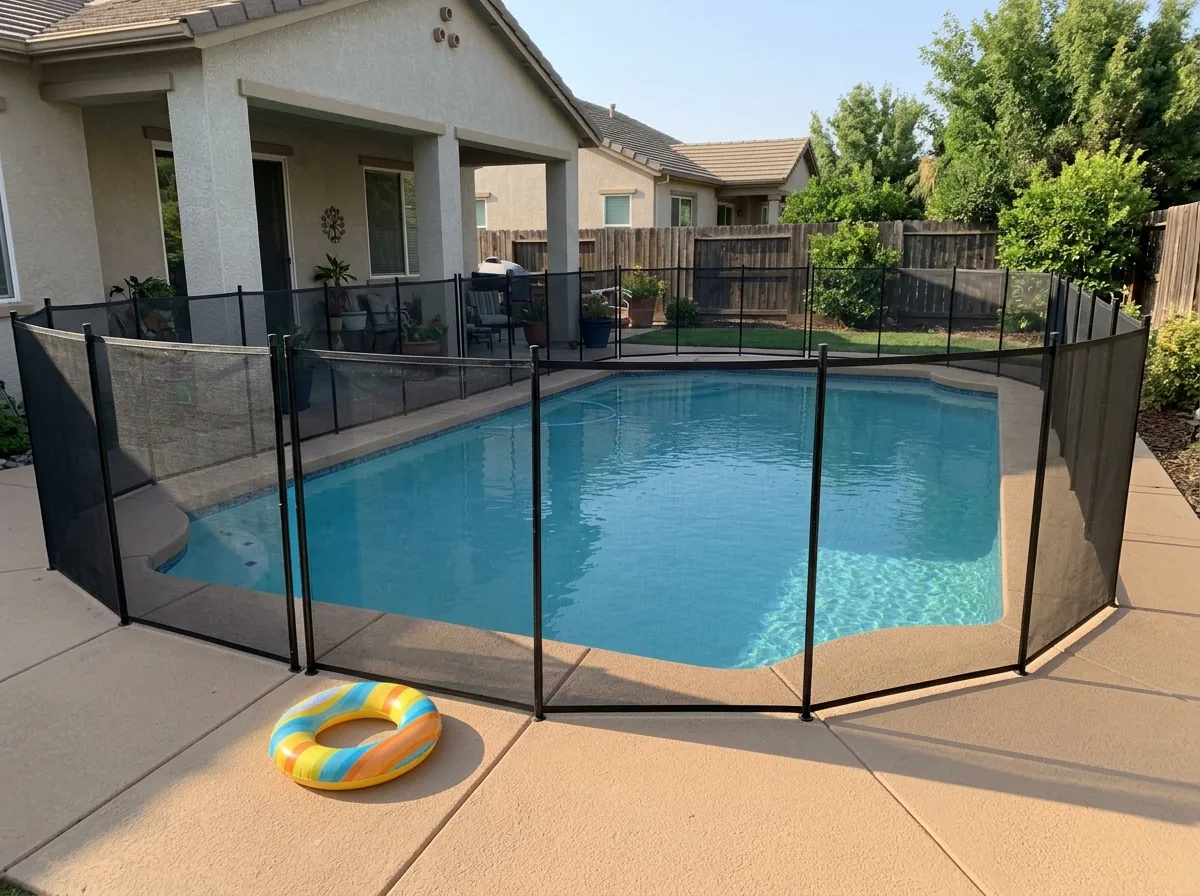
Mesh (Removable) Pool Fences
Mesh pool fencing is a soft, low-maintenance barrier that is hard to climb, and it sits with chain link and galvanized steel among the cheapest options. Guides warn that removable mesh is less durable and less secure than a permanent fence, and it still has to meet the 60-inch height.
- Installed: about $10 to $30 a linear foot
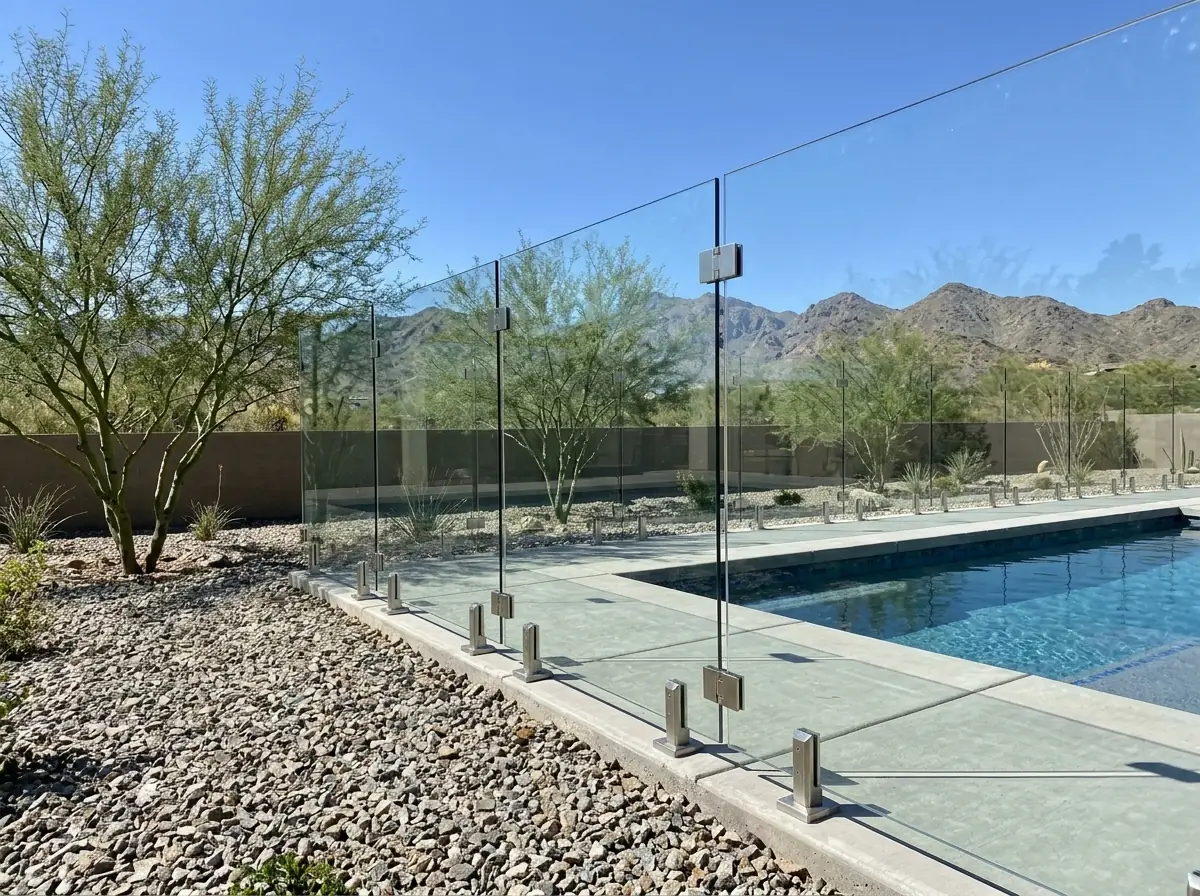
Glass Panel Pool Fences
Glass keeps the view open and has no rails to climb. Panels are tempered safety glass, framed or clamped frameless. HomeGuide lists the standard panel at 4 feet tall, which is under California's 60-inch minimum, so make sure the quote is for 5-foot panels.
- Framed: $120 to $300 a linear foot
- Frameless: $150 to $500 a linear foot
- Glass thickness: 10 to 15 mm, with 12 mm standard for homes
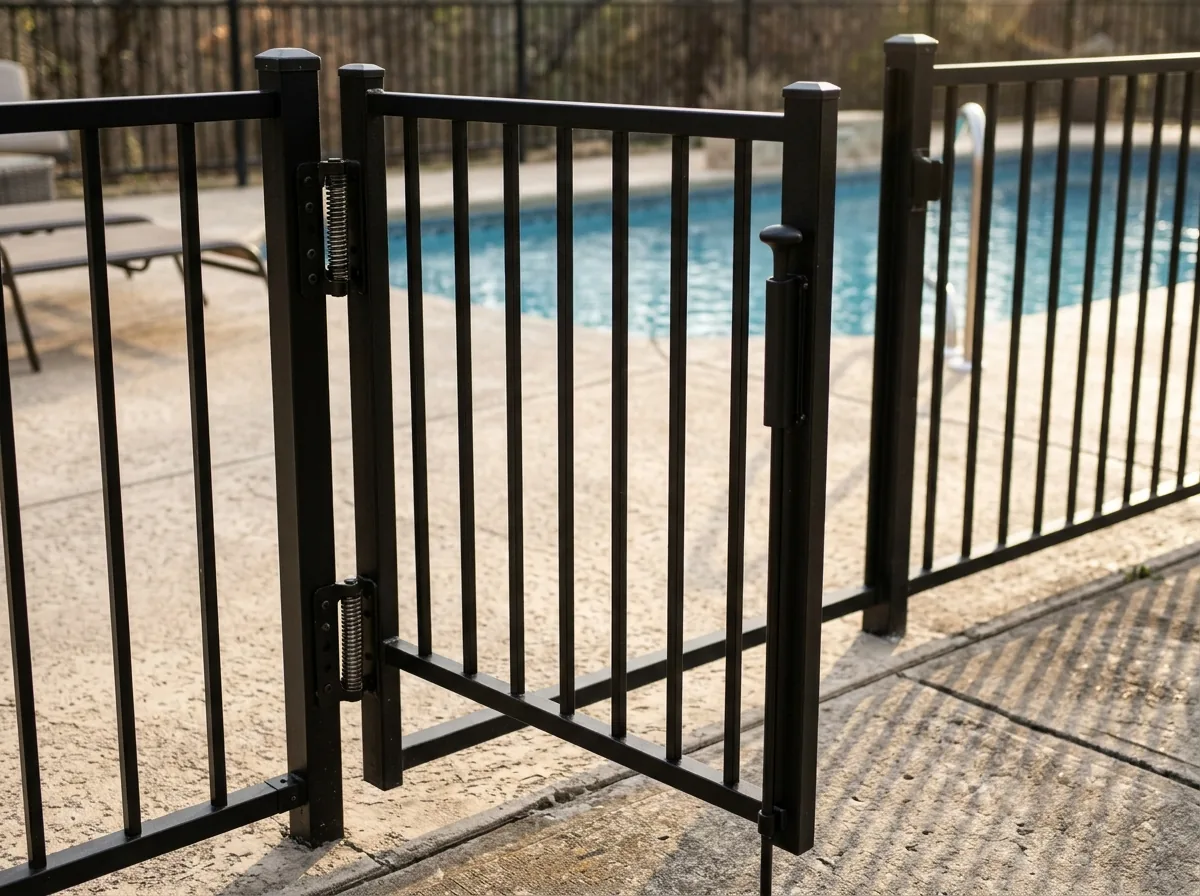
Self-Closing, Self-Latching Pool Gates
Pedestrian gates must swing away from the pool and close and latch by themselves every time. The state and city texts we read give different latch heights, so confirm the required height with Building and Safety before the gate is hung.
- Self-closing, self-latching gate: about $200 to $800
- Maximum gate leaf: 4 feet wide without the city's specific approval
Why Hesperia homeowners call Hesperia Expert Fencing
- Calling or using the form doesn't cost you anything
- We send your job to one contractor, so your phone isn't ringing all week
- Ask for posts, footings, gates and haul-away priced line by line
- Look up the C-13 (fence) or C-29 (block wall) license at cslb.ca.gov
Pool Fence Cost by Material
| Material | Installed, per linear foot |
|---|---|
| Removable mesh | $10-$30 |
| Aluminum | $30-$45 |
| Tubular steel / wrought iron | $50-$85 |
| Tempered glass | $120-$500 |
HomeGuide's national average is $7,800 for 200 to 300 feet. Fencing 250 feet in aluminum at $30 to $45 a foot comes to $7,500 to $11,250, plus a $200 to $800 gate (our arithmetic). Glass permits alone run $50 to $300 in national terms.
Hesperia's Pool Barrier Rules
California's Health and Safety Code 115923 defines a pool enclosure, and the City of Hesperia's pool fencing handout adds local detail. Together they ask for:
Height
at least 60 inches, measured on the side away from the poolBottom gap
no more than 2 inches above gradeOpenings
none that pass a 4-inch sphere, and no decorative cutouts or protrusions that give a child a footholdGates
swing away from the pool, self-closing and self-latchingChain link
at least 11-gauge wire with small openings, slats allowed to close themDoors from the house
a self-closing, self-latching door or an alarm, per the handout
The handout is dated 2008, and on latch height it differs from the state text, so treat it as a guide and confirm current rules with the city.
Installation Steps
- 1
Plan the line and gates
Decide whether the barrier wraps the pool or the yard, and where the gate goes. - 2
Mark utilities and set posts
Get buried lines marked before digging (the rules are on our chain link fence page), then set posts in the deck or in concrete footings. - 3
Hang panels and gates
Simple mesh jobs take hours. Concrete work stretches it to two days. - 4
Test the gate
Open it partway, let go, and watch it close and latch on its own before the final payment.